
Different Songs. Same Gospel.
When Truth Matters More Than Preference
One of the most common conversations worship pastors and worship leaders have isn't about sound systems, instruments, or even musicians—it's about songs.
"Why don't we sing more hymns?"
"Why are we introducing so many new songs?"
"I didn't know that song."
"That song just isn't my style."
These conversations happen in churches around the world. They aren't unique to one church, one denomination, or one style of worship. They are the natural result of bringing together people from different generations, cultures, and spiritual journeys. In a healthy church, that diversity is something to celebrate. At the same time, it raises an important question:
What is congregational worship really about?
Perhaps the answer is simpler than we sometimes make it. We may sing different songs, in different styles, and with different musical arrangements, but we gather around the same gospel. Our unity has never been found in our musical preferences. It is found in Christ.
I didn't arrive at this conviction overnight. It has been shaped through years of serving in churches with different generations, cultures, and musical backgrounds. While musical preferences naturally differ, one truth has become increasingly clear to me: congregational worship flourishes when God's people value the truth they are singing more than the familiarity of the song itself.
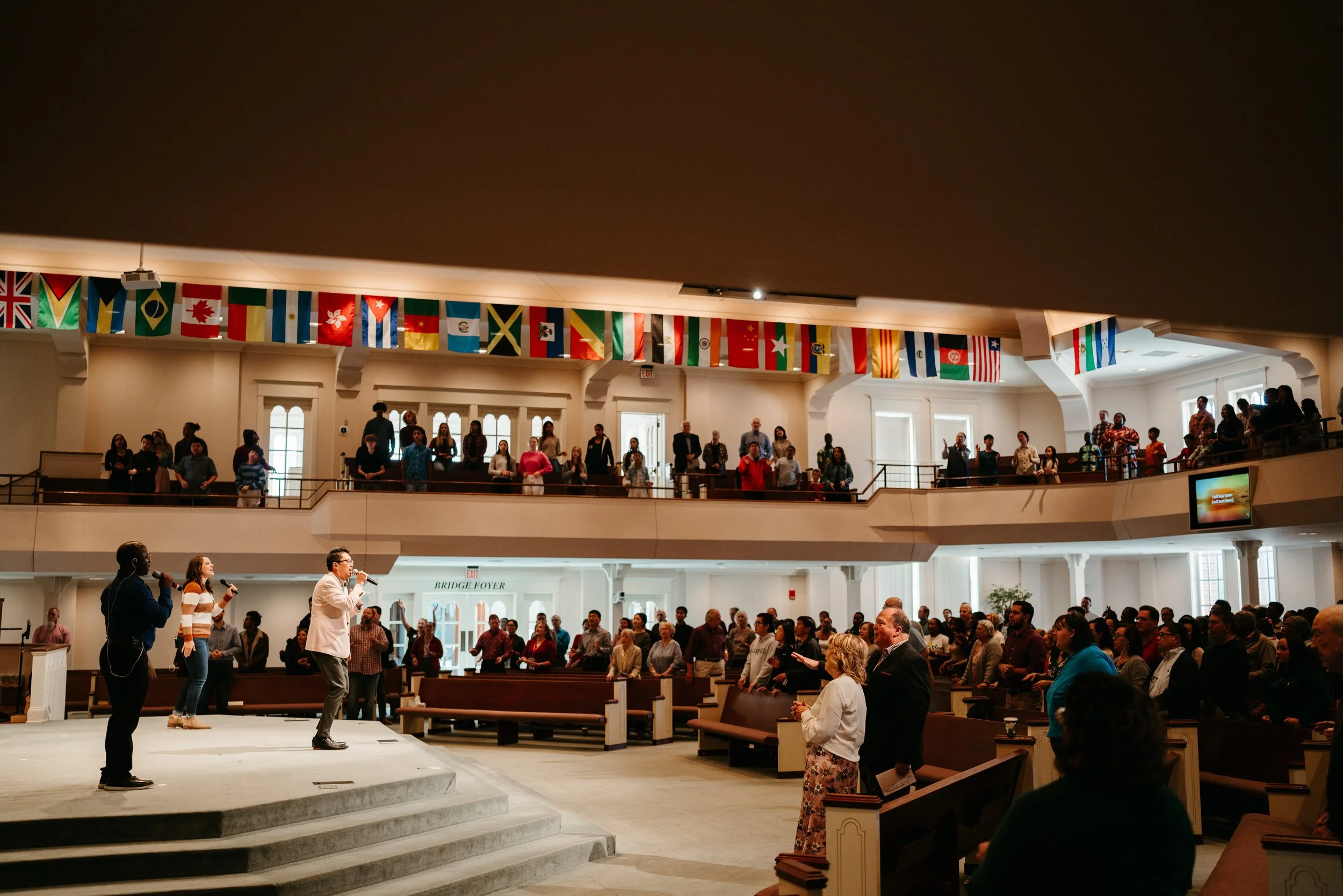
One of the joys—and challenges—of serving in a multi-generational and multicultural church is realizing that there is no worship playlist that will perfectly fit everyone. Every Sunday, people gather with different backgrounds, cultures, musical preferences, spiritual maturity, and church experiences. Some grew up singing hymns. Others came to faith through contemporary worship. Some have walked with Christ for decades, while others are just beginning their journey with Him.
Because of that diversity, it is simply impossible to choose songs that every person already knows, loves, or prefers.
Let the word of Christ dwell richly among you, in all wisdom teaching and admonishing one another through psalms, hymns, and spiritual songs, singing to God with gratitude in your hearts. -- Colossians 3:16 (CSB)
In this passage, Paul is not giving instructions to worship leaders on how to build the perfect setlist. He is writing to the entire church about what life together looks like when the gospel shapes a community of believers. The command is to let the word of Christ dwell richly among God's people. One of the natural results of that gospel-centered life is congregational singing. As believers sing together, they teach and encourage one another while expressing thankful hearts to God. The emphasis is not on musical style or personal preference but on the truth of God's Word filling His people and overflowing in worship.
That perspective should shape the way we think about singing on Sunday mornings.
Sometimes I hear comments such as, "I didn't sing because I didn't know the song," or "That song isn't really my style."Those feelings are understandable. We all have musical preferences. But our willingness to sing should never be determined by our familiarity with a song or whether it matches our preferred style or arrangement. Worship begins with God, not with us. He alone is worthy of our praise.
Instead of asking, "Do I know this song?" perhaps we should ask a better question:
"Does this song faithfully proclaim the truth of God's Word?"
If the answer is yes—if the song is rooted in Scripture and theologically sound—then it is worthy of being sung, even if it is new to us.
Consider how we respond to the preaching of God's Word. We would never decide not to listen simply because the pastor is preaching from a passage we have never studied before. As long as he faithfully teaches Scripture, we gladly receive it because it is God's truth. The same principle applies to our singing. Whether the song is a centuries-old hymn or a newly written worship song, what matters most is not its age or style but whether it faithfully communicates biblical truth.
This is not an argument against hymns or an argument for contemporary worship. It is a plea for all of us to evaluate every song—old or new—by the same standard: Does it faithfully proclaim the truth of God's Word?
This perspective is especially important in a church like ours. We are not only multi-generational but also multicultural. What is deeply familiar to one person may be completely new to another. A beloved hymn may be cherished by those who have sung it for decades while being entirely unfamiliar to a new believer. Likewise, a contemporary worship song may resonate with younger generations but be unfamiliar to those who have worshiped with hymns for most of their lives. If we only sang what everyone already knew, our congregation would never grow in its shared vocabulary of praise.
In fact, every hymn we treasure today was once a new song. There was a time when no one had ever sung Holy, Holy, Holy, Great Is Thy Faithfulness, or It Is Well with My Soul. Someone had to introduce them. Congregations had to learn them. Over time, they became part of the church's worship vocabulary and are now cherished by believers around the world. The issue has never been whether a song is old or new. The issue has always been whether it faithfully proclaims the truth about God.
The Bible also repeatedly calls God's people to "sing a new song."
1 Sing a new song to the Lord; let the whole earth sing to the Lord.
2 Sing to the Lord, bless his name; proclaim his salvation from day to day.
3 Declare his glory among the nations, his wondrous works among all peoples. -- Psalm 96:1-3 (CSB)
In its context, the psalmist is calling all the earth to praise the Lord because of His marvelous works, to proclaim His salvation day after day, and to declare His glory among the nations. The emphasis is not merely that the song is new. Rather, it is that God's unchanging character and His ongoing work are always worthy of fresh praise. Throughout Scripture, God's people treasured songs that had been passed down through generations, and they also sang new songs in response to what God was doing. The church, therefore, does not have to choose between old and new. Faithful worship has always made room for both.
As worship leaders, we have a responsibility not only to select songs but also to shepherd God's people in worship. Our calling is not to satisfy every musical preference but to help the church sing the truth together. Introducing a new song should never be about chasing the latest trend. It should be about giving the congregation another faithful way to proclaim the truths of the gospel.
Because of that conviction, we intentionally try to remove unnecessary barriers to congregational singing. When we introduce a new song, we usually sing it for at least two consecutive weeks so people have the opportunity to become familiar with it instead of hearing it only once. We create a Spotify playlist featuring the songs we'll be singing over the coming weeks, including songs we plan to introduce, so people can listen throughout the week. We also produce Sing Devotional, a short devotional that explores the biblical truths found in those same songs. Even after the service, we often play newer songs during the closing slides as people leave, hoping the melodies and lyrics continue to linger in their hearts and minds throughout the week. None of these practices are about promoting certain songs. They are simply ways to help remove unnecessary barriers so that, when God's people gather, they can sing His truth with greater confidence and joy.
We also intentionally set the sound level so that the congregation can hear one another sing. Our goal is not to create a concert where the band overwhelms the room. Instead, we want the voices of God's people to fill the room together. The congregation is not merely listening to worship—they are the primary worshipers. The praise team serves as leaders and encouragers, supporting the church's singing rather than replacing it. God alone is the audience worthy of our worship.
At the end of the day, congregational worship has never been about finding the perfect musical style. It is about God's people proclaiming God's truth together. No one musical style, era, language, or arrangement can fully reflect the beauty and diversity of Christ's church. Yet every generation, every culture, and every believer shares the same Savior and the same gospel.
Different songs. Same gospel.
May our worship always be shaped more by the truth of God's Word than by the familiarity of the music. May we gladly sing treasured hymns and biblically faithful new songs alike—not because they fit our personal preferences, but because they faithfully proclaim the unchanging gospel of our worthy Savior.
May we continue to sing different songs, but never a different gospel.
About the Author
Pastor Rico Cakranata has served in worship ministry for more than 25 years in Indonesia and the United States. As Worship Pastor at First Baptist Church Duluth, he is committed to leading worship that is rooted in Scripture, centered on Christ, and focused on helping the congregation sing God's truth together.